Table of Contents
Kids love dirt. They love digging holes for no apparent reason other than the sheer joy of moving earth. Forget the flimsy plastic shovels that snap the first time they hit a stubborn root. The ultimate tool in a young excavator's arsenal is the playground backhoe. Walk onto almost any well-equipped playground or into a backyard sandbox, and you'll likely spot one of these metal contraptions. They sit there, often bolted down, looking like miniature construction giants. There's something undeniably captivating about those levers and the promise of scooping, lifting, and dumping. Why do kids gravitate towards the playground backhoe like iron filings to a magnet? Is it the feeling of power? The mimicry of adult construction work? Or just the simple, satisfying mechanics of the machine? This article isn't just about what a playground backhoe looks like. We're going to explore why they're such a hit. We'll discuss the different kinds you might encounter. More importantly, we'll uncover the actual benefits they offer beyond just keeping a kid busy. We'll also touch on how to ensure these digging adventures remain safe and enjoyable. Get ready to get your hands dirty, figuratively speaking.
Why Every Kid Wants a Playground Backhoe
Why Every Kid Wants a Playground Backhoe
The Call of the Construction Site
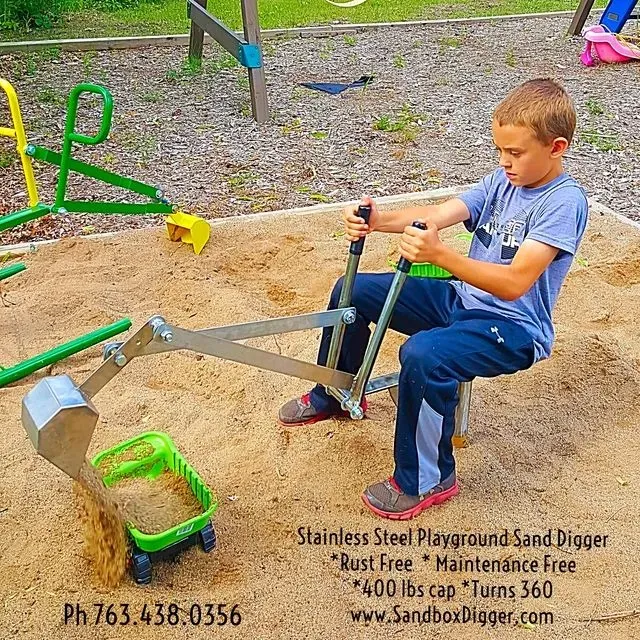
Have you ever watched a kid's face light up when they see a real backhoe or excavator working? There's this primal fascination with big machines that dig and move things. A playground backhoe taps directly into that. It's not just a toy; it's a scaled-down version of something powerful and purposeful they see in the adult world. Kids are natural mimics, and this gives them a chance to play the role of the builder, the operator, the one in control of changing the landscape, even if it's just a pile of sand. They get to feel like they're doing "real" work, the kind that makes noise and gets dirty. That connection to the adult world, the sense of operating something substantial, is a huge draw. It's like giving them the keys to their own mini-construction kingdom.
Mastering the Machine
Beyond the role-playing, there's the pure satisfaction of operating the thing. A playground backhoe usually has levers and pivots. Learning how to coordinate those movements – dip the bucket, scoop the sand, lift it up, swing it around, dump it out – is a genuine challenge and a rewarding one. It requires hand-eye coordination and understanding simple mechanics. Kids aren't thinking about fine motor skills or cause and effect, but they're learning them nonetheless. They're figuring out how their actions on the levers translate to the bucket's movement. There's a real sense of accomplishment when they successfully scoop a big load or manage to pile the sand exactly where they want it. It's a tangible interaction with the physical world, one where they are the operator making things happen.
So, what do you think is the biggest draw for a kid: feeling like a construction worker or mastering the controls?
Choosing the Right Playground Backhoe: Types and Features
Choosing the Right Playground Backhoe: Types and Features
Sitting Down or Standing Tall?
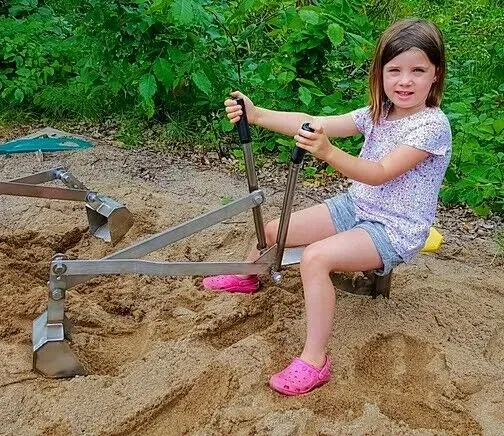
so you're sold on the idea. Your little earth-mover needs a playground backhoe. But walk into a store or browse online, and you'll quickly realize they aren't all the same. The first big fork in the road is whether you want a stand-alone model or one that's part of a larger sandbox or play structure. Stand-alone ones are great if you already have a pit or just want something portable (relatively speaking, these things are heavy). They usually have a wide base for stability and a seat, letting the kid sit and dig. The ones integrated into sandboxes mean the backhoe is fixed in place, often mounted on a post. Less flexibility, maybe, but potentially more stable and less likely to walk away if you're in a public spot. Think about where it's going to live and how much space you've got before deciding.
Metal Muscle or Plastic Pretender?
This is where durability really comes into play, and frankly, where some toys fall short. A good playground backhoe is going to take a beating. Kids aren't known for their gentle touch, especially when dirt is involved. You'll find models made mostly of plastic, which are lighter and cheaper, but let's be real – they often don't last. The gears strip, the plastic cracks, and suddenly that dream digger is just a brightly colored lump. Then you have the metal ones, often steel or even stainless steel for serious outdoor use. These are heavier, more expensive, but built like miniature tanks. They can handle the leverage, the grit, the endless scooping. If you want something that will survive more than one season of enthusiastic digging, metal is usually the way to go. Look for powder coating to prevent rust, unless you're springing for stainless.
- Plastic Backhoes: Lightweight, cheaper, less durable, good for very young kids or occasional use.
- Metal Backhoes: Heavy-duty, more expensive, built to last, ideal for frequent use and older kids.
- Stainless Steel Backhoes: Top tier, rust-proof, most expensive, practically indestructible.
Ever seen a plastic scoop snap mid-dig? It's like witnessing a tiny engineering failure in real-time.
Spinning, Gripping, and Scooping Power
Beyond the material, check the features. Can the seat or the main boom rotate 360 degrees? Some models are fixed, meaning the kid has to constantly reposition themselves or the bucket only swings in a limited arc. Full rotation adds a lot more play value. Also, look at the handles. Are they easy for small hands to grip and operate? Are the levers smooth or stiff? A good playground backhoe should have controls that move easily but still offer enough resistance for precise movements. Finally, consider the bucket size and shape. A deeper bucket can hold more, obviously, but might be harder for a smaller kid to lift when full. A wider bucket might be better for scooping loose sand. It's the little things that make a big difference in how long they'll actually play with it before getting frustrated.
Beyond the Dirt: Real Benefits of Playing with a Playground Backhoe
Beyond the Dirt: Real Benefits of Playing with a Playground Backhoe
Building Muscle and Motor Skills
so it looks like fun, but is it doing anything else? Absolutely. Operating a playground backhoe isn't just sitting there spinning. It requires actual physical effort. Kids use their core muscles to twist the seat (if it rotates), their arm and shoulder muscles to push and pull those levers, and their hands and fingers to grip. It's a fantastic workout disguised as play. Think about the coordination needed: one hand on the boom lever, the other on the bucket lever, maybe their feet stabilizing themselves. They're learning to isolate movements, coordinate both sides of their body, and develop fine motor control as they try to scoop precisely or dump carefully. It's way more engaging than squeezing one of those stress balls, and they're building functional strength they'll actually use.
Lessons in Problem-Solving and Patience
Beyond the physical stuff, the playground backhoe is a quiet teacher of important life skills. Scooping sand isn't always easy. Sometimes the bucket's too full and heavy. Sometimes the sand is wet and sticky. Kids have to figure out the right angle, the right amount of force, the correct sequence of lever movements to get the job done. They learn about cause and effect in a very direct way – pull this lever, the bucket goes up. Push that lever, it goes down. They also learn patience. Getting that perfect scoop or building that epic sandcastle wall takes time and repeated effort. They encounter frustration when things don't work out, and they learn perseverance by trying again. It's hands-on problem-solving, far more effective than any worksheet.
So, what exactly are they gaining from all that digging?
- Improved hand-eye coordination
- Enhanced fine and gross motor skills
- Development of core and upper body strength
- Practical understanding of simple mechanics
- Lessons in patience and perseverance
- Problem-solving through trial and error
- Spacial reasoning as they manipulate the bucket
Keeping Your Playground Backhoe Fun and Safe
Keeping Your Playground Backhoe Fun and Safe
Keeping the Digging Safe and Sound
Alright, so the kids are hooked on their playground backhoe, moving mountains of sand or mulch. That's great. But let's talk about keeping all ten fingers attached and avoiding scraped knees. These things, especially the metal ones, are heavy pieces of equipment with pinch points and moving parts. Regular checks are non-negotiable. Look for loose bolts, sharp edges that might have developed, or cracks in the frame or seat. Make sure the pivot points are still moving smoothly but aren't dangerously wobbly. If it's bolted down, check those anchors. Kids get enthusiastic, and the last thing you want is the whole setup tipping over. Teach them the basics: no standing on the bucket, no swinging it wildly when someone is too close, and definitely no trying to lift their sibling. It sounds obvious, but in the heat of a major excavation project, common sense can sometimes get buried under the sand.
- Inspect regularly for loose bolts or sharp edges.
- Check all moving parts for smooth, safe operation.
- Ensure anchors are secure if the backhoe is fixed.
- Teach kids not to stand on the bucket or get too close when it's in use.
- Keep the area around the playground backhoe clear of obstacles.
The Last Scoop on the Playground Backhoe
So, the enduring appeal of the playground backhoe isn't just about moving sand from point A to point B. It taps into something fundamental: the desire to manipulate the environment, to mimic the adult world, and to understand simple mechanics through direct, physical action. Whether it's a heavy-duty metal model bolted to the ground or a sturdy backyard version, these diggers provide more than just entertainment. They're tools for developing coordination, problem-solving skills, and a healthy dose of imaginative play. They might get covered in dirt and occasionally cause minor squabbles over whose turn it is, but the value they add to a child's play experience is hard to underestimate. They remain a staple for a reason.