Table of Contents
Getting kids off screens and into the fresh air feels like a win. Making your backyard the go-to spot for adventure is even better. That's where the magic of yard playground equipment happens. A well-chosen swing set, a sturdy slide, or a challenging climbing structure can turn ordinary grass into an epic play space. But let's be real, navigating the sheer volume of options out there can feel like its own obstacle course. You're wondering about safety standards, what materials hold up best, and how to pick something that keeps kids engaged longer than five minutes. This article is your map through that maze. We'll guide you through selecting the ideal yard playground equipment for your specific needs and space, break down the popular types you'll encounter, cover the non-negotiable safety steps for installation, and share practical tips for maintenance to ensure years of safe, active play. Let's make your backyard the highlight reel of childhood.
Choosing the Right Yard Playground Equipment for Your Space
Choosing the Right Yard Playground Equipment for Your Space
Measure Twice, Buy Once: Sizing Up Your Backyard
Alright, step one in the quest for epic yard playground equipment? Look out the window. No, seriously, go stand in your backyard. How much actual usable space do you have? We're not just talking about the grass area. You need room *around* the equipment too. Safety zones are non-negotiable. Think about where the swing set will go – you need clearance in front and back. A slide needs run-out room at the bottom. Ignoring this step is like buying a king-size bed for a studio apartment; it just won't work, and someone's gonna get hurt tripping over it.
Factor in existing features. Are there trees, fences, or that weird shed your neighbor keeps threatening to remove? All that stuff dictates what kind of yard playground equipment fits. A massive playset might look cool online, but if it swallows your entire yard and blocks the path to the grill, you'll regret it faster than you regret that questionable haircut from college.
Who's Playing? Matching Gear to Ages and Interests
Next up, think about the target audience. A two-year-old has vastly different needs (and coordination levels) than a ten-year-old. Buying a huge climbing wall for a toddler is just asking for tears (yours, probably). Consider the age range of the kids who will use the yard playground equipment most often. Will siblings of different ages play together? Look for features that appeal to a wider range.
What do your kids actually *like* to do? Are they climbers? Swingset enthusiasts? Do they love imaginative play? Don't just buy the biggest, flashiest thing because the marketing photos look good. If your kid spends hours building forts out of blankets, maybe a playset with a clubhouse feature is a better bet than one focused purely on monkey bars. Getting the right yard playground equipment means matching it to their current (and future) play style.
Things to Consider Based on Kid's Age:
- Toddlers (1-3): Low-height slides, bucket swings, sandboxes, small playhouses. Focus on gross motor skills and sensory play.
- Preschoolers (3-5): Standard swings, short rock walls, tube slides, play decks. Introduce climbing and balancing.
- School Age (6-10): Taller slides, monkey bars, challenging rock walls, trapeze bars, tire swings. More complex physical challenges.
- Older Kids (10+): Zip lines, challenging climbing structures, basketball hoops attached to playsets. Keep them engaged with higher difficulty.
Budget and Materials: What Will Last (And What Won't)?
let's talk money and materials. Yard playground equipment isn't exactly pocket change, so figure out what you're willing to spend. Remember to factor in potential installation costs if you're not a DIY warrior. Cheaper isn't always better; flimsy plastic might seem like a deal until it cracks after one season. Wood and metal are common materials, each with pros and cons.
Wooden sets, often cedar or redwood, look great and blend into the yard, but they require maintenance – staining, sealing, checking for splinters. Metal sets, usually powder-coated steel, are low maintenance and durable, but they can get hot in the sun and might not have the same aesthetic appeal for everyone. The material you choose for your yard playground equipment impacts its lifespan and how much work you'll put into keeping it safe and looking good.
Exploring Different Types of Yard Playground Equipment
The Classic Swing Set: More Than Just Back and Forth
When you picture yard playground equipment, the swing set is probably the first thing that pops into your head. It's a backyard staple for a reason. Simple, effective, and surprisingly fun for a huge age range. But swing sets aren't just two swings on a bar anymore. You've got your basic A-frame, which is stable and straightforward. Then there are playsets that incorporate swing beams, adding swings to a larger structure.
Think about the swing types too. Standard belt swings are great for most kids. Toddlers need bucket swings for safety. Tire swings are fantastic for spinning and group play. Even glider swings or trapeze bars can be added to mix things up. A good swing set provides that fundamental motion kids crave, the feeling of flying, even if it's only a few feet off the ground.
Playsets: The All-In-One Backyard Adventure
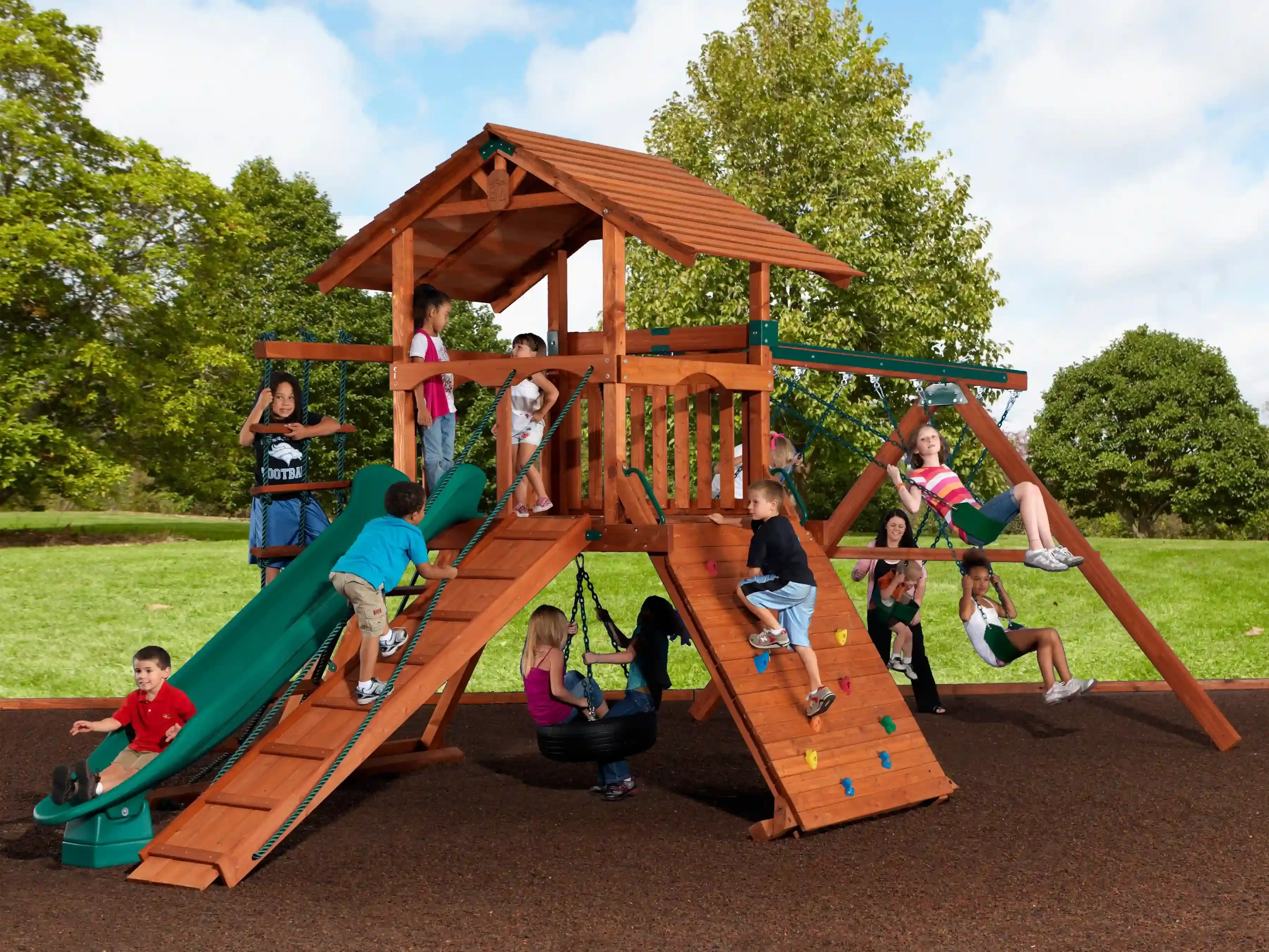
Playsets are like the Swiss Army knife of yard playground equipment. They combine multiple activities into one structure. You'll typically find swings, slides (straight, wavy, or even tube slides), climbing features like rock walls or cargo nets, and often a play deck or clubhouse area up top. These are fantastic if you have the space and want to offer a variety of activities to keep kids entertained for longer stretches.
Playsets come in various sizes and configurations. Some are compact and fit smaller yards, while others are sprawling complexes that could host a small village. The material is usually wood (cedar or redwood being popular) or metal. A playset can be the centerpiece of your backyard, providing endless scenarios for imaginative play, from defending a castle to piloting a spaceship.
Playset Features to Look For:
- Multiple slide types (straight, wavy, tube)
- Different climbing challenges (rock wall, cargo net, ladder)
- Elevated play deck or clubhouse
- Built-in sandbox
- Picnic table or seating area
- Steering wheel or telescope for imaginative play
Stand-Alone Structures: Adding Specific Fun
Maybe you don't have room for a full playset, or you want to complement an existing one. Stand-alone yard playground equipment fills that gap perfectly. A simple slide can be a blast, especially if you have a natural slope in your yard. Climbing domes or geometric climbers offer great upper body workouts and problem-solving skills as kids figure out routes.
Spring riders, those bouncy animals or vehicles, are a hit with younger kids. Sandboxes, either simple plastic shells or more elaborate wooden structures, provide hours of sensory play and creativity. Even things like monkey bars or balance beams sold separately can turn a corner of your yard into a mini-gym. The beauty of stand-alone pieces is their flexibility; you can add them one by one as your budget and space allow, building your ultimate yard playground equipment collection.
Ensuring Safety and Proper Setup for Your Yard Playground Equipment
Ensuring Safety and Proper Setup for Your Yard Playground Equipment
Picking the Perfect Spot and Cushioning the Landing
you've picked out the perfect yard playground equipment. Exciting, right? Now, before you even think about ripping open those boxes, let's talk location and landing. Dropping a swing set onto concrete or packed dirt is a recipe for disaster. Seriously, bones break on that stuff. You need a safety surface underneath and extending several feet out from the equipment. Think wood chips, mulch, sand, or those fancy rubber tiles designed specifically for playgrounds.
Measure the fall zones required for your specific yard playground equipment – the manufacturer instructions will spell this out. It's usually based on the height of the highest platform or swing. Clear the area of rocks, roots, stumps, or anything else a kid could trip on or fall onto. And make sure the spot is level. Trying to install a playset on a slope is like trying to build a house on quicksand; it's just not going to end well.
Assembly Ain't a Suggestion: Bolting it Down
Alright, instructions. Yeah, I know. But for yard playground equipment, reading them is non-negotiable. Don't wing it. Follow the steps precisely. Make sure every bolt is tightened, every connection is secure. This isn't IKEA furniture you can just nudge into place and hope for the best. This is where your kids will be launching themselves through the air.
Anchoring is just as critical. Most yard playground equipment needs to be anchored to the ground to prevent tipping, especially swing sets. High winds can turn an unanchored playset into a dangerous projectile. Use the anchors provided, or if they seem flimsy, invest in stronger ones. Once it's up, do a safety check. Pull on the swings, shake the structure. Does anything wobble? Does anything look off? Better to find out now than during playtime.
Essential Safety Checks:
- Check all bolts, nuts, and screws regularly for tightness.
- Look for cracks or splinters in wooden components.
- Inspect metal parts for rust or sharp edges.
- Ensure hooks and hangers on swings are not worn.
- Check ropes and chains for signs of fraying or weakness.
- Confirm safety surfacing is adequate and maintained.
- Clear the play area of debris, toys, or obstacles before each use.
Maintaining Your Yard Playground Equipment for Lasting Fun
Maintaining Your Yard Playground Equipment for Lasting Fun
The Weekly Rundown: Checking for Trouble Spots
you've got your yard playground equipment installed, anchored, and surrounded by nice, soft landing material. High five! But the job isn't over. Think of it like owning a car; you wouldn't just drive it until it breaks down, right? Same goes for playsets. You need to do regular check-ups. Make it a habit, maybe every weekend or every couple of weeks, especially during peak play season.
Grab a wrench and a screwdriver. Walk around the entire structure. Are any bolts loose? Is hardware popping out? Tighten anything that feels wobbly. Look for splinters on wooden parts – sand those down before they find someone's backside. Check metal components for rust; a little surface rust can be sanded and painted, but deep rust is a warning sign. Examine ropes, chains, and swing hangers for wear and tear. Frayed ropes or thin chain links are accidents waiting to happen. Catching these small issues early prevents bigger problems down the line and keeps your yard playground equipment safe for action.
Keeping it Clean and Protected from the Elements
Nature is great for playing in, but it's rough on yard playground equipment. Sun, rain, snow, even bird droppings can take a toll. Cleaning isn't just about aesthetics; it prevents deterioration. Use a mild soap and water solution to wash down plastic and metal parts periodically. This gets rid of grime and prevents mold or mildew growth on wood.
For wooden sets, maintenance is key to preventing rot and insect damage. Depending on the wood type and your climate, you'll likely need to re-stain or re-seal it every year or two. This protects the wood from moisture and UV rays, keeping it looking good and structurally sound. Metal sets benefit from occasional touch-up painting if the powder coating gets scratched, preventing rust from spreading. A little effort here means your yard playground equipment won't look like a haunted ruin after a few seasons.
Seasonal Maintenance Checklist:
- Spring: Inspect for winter damage, tighten hardware, clean surfaces, check safety surfacing depth.
- Summer: Regular checks for loose bolts and splinters, keep safety zone clear, check for heat on metal parts.
- Fall: Clean thoroughly before winter, check wood for cracks, consider staining/sealing if due, store removable accessories.
- Winter: (If applicable) Remove swings and other fabric/plastic parts, cover if possible, avoid using in icy conditions.
Repairing the Wear and Tear (And Knowing When to Say Goodbye)
Even with diligent maintenance, parts wear out. Plastic slides can crack, swing seats split, wood pieces might show significant rot. Don't ignore these issues. Many manufacturers sell replacement parts. Swapping out a broken swing seat or a cracked plastic component is usually straightforward and much cheaper than buying a whole new setup.
Learn how to identify structural issues. Deep cracks in weight-bearing wooden beams, significant rust on metal supports, or wobbly main frames are serious red flags. Trying to patch up a fundamentally unsound piece of yard playground equipment isn't worth the risk. There comes a point where repairs aren't enough, and the safest option is to dismantle the old set and replace it. It's a tough call, sure, but ensuring your kids' safety is non-negotiable.
Making the Most of Your Yard Playground Equipment
So, you've looked at the options, weighed the pros and cons for your specific yard and budget, and considered the safety aspects. Getting yard playground equipment isn't just about dropping some plastic or wood in the grass. It's about creating a dedicated spot where kids can burn energy, test their limits, and invent worlds. Keeping it safe means checking bolts, soft ground cover, and clear zones. Maintaining it properly ensures it lasts more than a couple of seasons. It’s an investment in their physical activity and imagination, a potentially messy, noisy, and utterly worthwhile addition to your home. Don's just buy it, make it a place they actually want to be.